Istanbul or Constantinople?
November 17, 2025
Location: Istanbul, Turkey
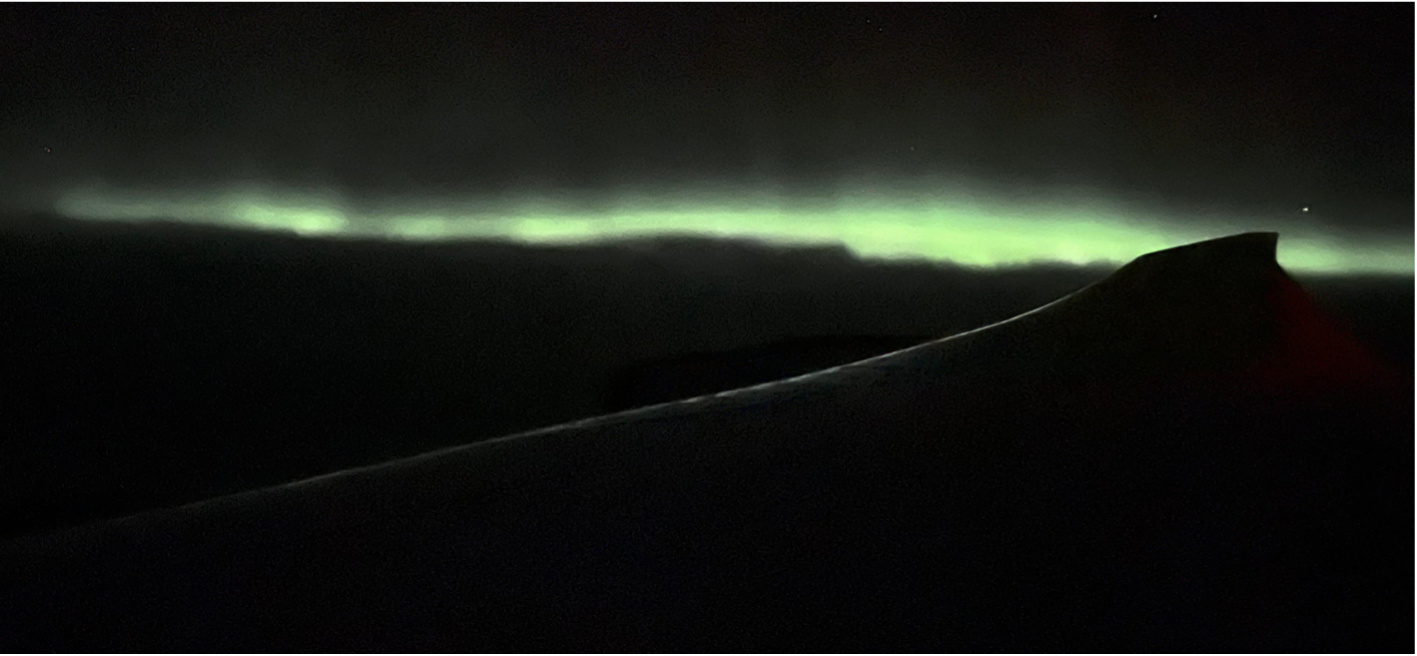
After leaving Mundelein Seminary, we traveled 22 hours to reach Istanbul at around 6:30 last night, our first destination for the 2025 Mundelein Pilgrimage following the Footsteps of Saint Paul. The trip was quite exhausting, especially considering that we flew out when the sun set and did not arrive until the sun had already set for the next day. However, spirits have been high, and many laughs that have been shared amongst the class on the various airplanes and buses we have traveled in. A blessing we were given on the plane was that the Aurora Borealis was on full display in the wee hours of Sunday Morning during our cross-Atlantic flight.
Arriving in Istanbul was quite the shock to me, because while I had been out of the country before, this was my first experience in a predominately Muslim Country. Furthermore, since I recalled from my history classes that this was once the center of the Byzantine Empire (predominately Catholic), this experience was tinged with a hint of sadness. Today, Istanbul is a massive city, one of the largest cities in Europe, with a population of over 20 million people. An interesting detail our tour guide mentioned is that the city has over 3,200 mosques. One of which is the former Cathedral of Constantinople, the Hagia Sophia.

Speaking of the Hagia Sophia (Greek for “Holy Wisdom”), it is one of the most ancient churches still standing today. Its third iteration was built in 532, making it nearly 1500 years old! Furthermore, the Hagia Sophia was the Cathedral for the Archdiocese Constantinople, the “New Rome.” Emperor Constantine founded the city as the capital of the Roman Empire in 324 and the Council of Constantinople declared that the archbishop of Constantinople would be one of the patriarchs (bishops in charge of locations of either the original Christian communities or of particular importance to the Church) in 381. One of those patriarchs of Constantinople is one of my favorite saints, St. John Chrysostom. He, however, would have preached and said mass in the first iteration of the basilica-cathedral.
Walking into the Hagia Sophia was bitter-sweet for many of my classmates and I, for we know its history. As we walked the upper levels (the area that is a museum), I could not help but think about all of the masses that were said there and how the air had a historical and spiritual weight to it. Much more so than the Blue Mosque that we went to earlier in the day. The most significant part about walking through the ancient church, turned mosque was when we walked through a set of marble doors and beheld a mosaic of our most blessed mother, Mary. As I walked through the doors, I remember audibly gasping as my eyes focused on her image, in near pristine condition compared to the other mosaics. One of the seminarians walking beside me teared up as well. Despite all the history of the Church, and how much Christian icons were plastered over, there she was. It was an amazing sight!
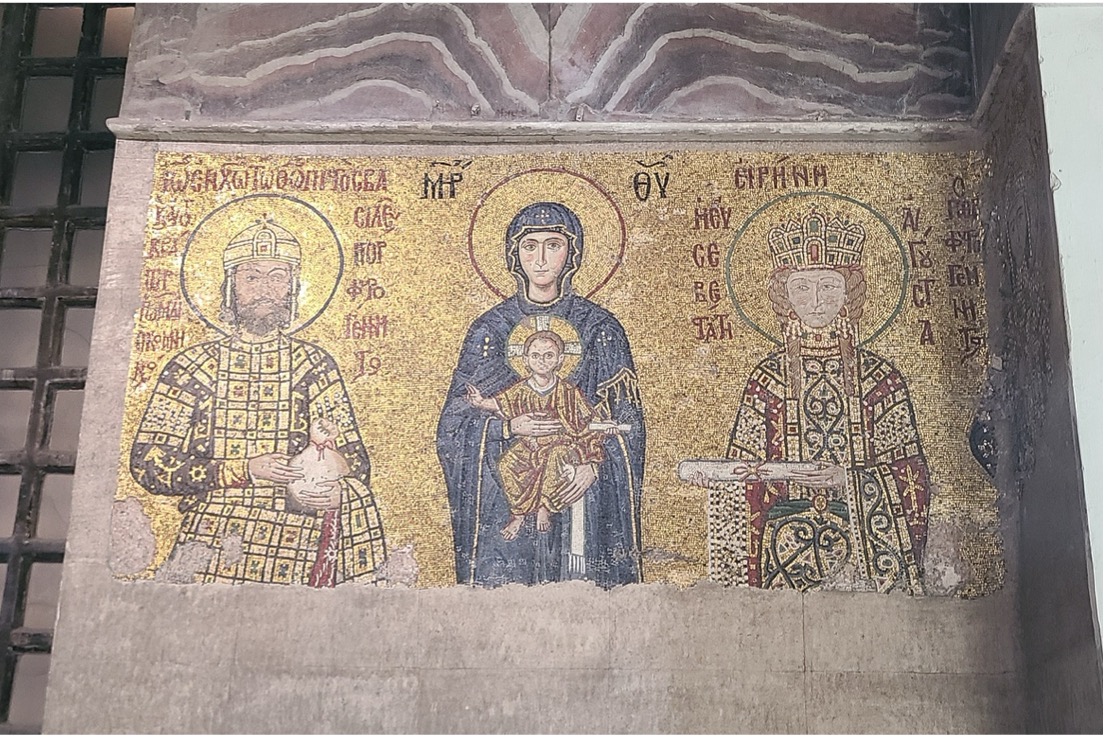
God spoke to my heart in walking through this ancient Church. It was not the grandeur of the building, the tragedy that it is no longer a place of Catholic worship, nor the history that spoke to me. No, it was that Mosaic of Mary that moved my heart so. It was as though she was waiting for me so that I would know that she would be walking this pilgrimage with me. I do not need to worry about what will happen throughout this pilgrimage because she will be there with me and I need only to receive it. To truly enter into this pilgrimage as a pilgrimreceiving anything and everything from God, with no expectations. What will be given will be given. And what seems like a crisis or a disappointment, like the building that was once a Church, now a Mosque, can hold many wonders within despite my first look. The providence of God shall see us through, like with Elisha and the Israelites: “When they entered Samaria, Elisha prayed, “O LORD, open their eyes that they may see.” The LORD opened their eyes, and they saw that they were inside Samaria.” (2 Kings 6:20) We will be in Athens, Rome, and Cappadocia. How great of work can God do if we but allow Him to open our eyes?
-Dominic Jirak, Diocese of Wichita, Kansas