Behold Your Mother (Jn. 19:27)
Location: SardiMiletus, Ephesus
We left our hotel in Izmir this morning for a day trip to the ancient cities of Miletus and Ephesus. Even as we began the three-hour bus ride that would end in Ephesus, we were excited for the special opportunity that awaited us: Mass at the house where the Virgin Mary and St. John the Apostle lived.
After Jesus entrusted His Mother to St. John at the Crucifixion, tradition tells us that Mary and John lived in Ephesus, a port city on the Aegean that boasted one of the seven wonders of the ancient world: the Temple of Artemis. Ephesus was a notable location in the early Church, where St. Paul established a community and to whom he penned a letter. Ephesus is also one of the seven churches St. John addresses in Revelation, encouraging the Christians there not to abandon the love they had upon first receiving the Gospel (Rev. 2:4). Furthermore, the dogma that Mary is the theotokos, the Mother of God, was defined at Ephesus in 431 AD. Considering the importance of this ancient community, I was personally looking forward to praying at Ephesus before this pilgrimage started!
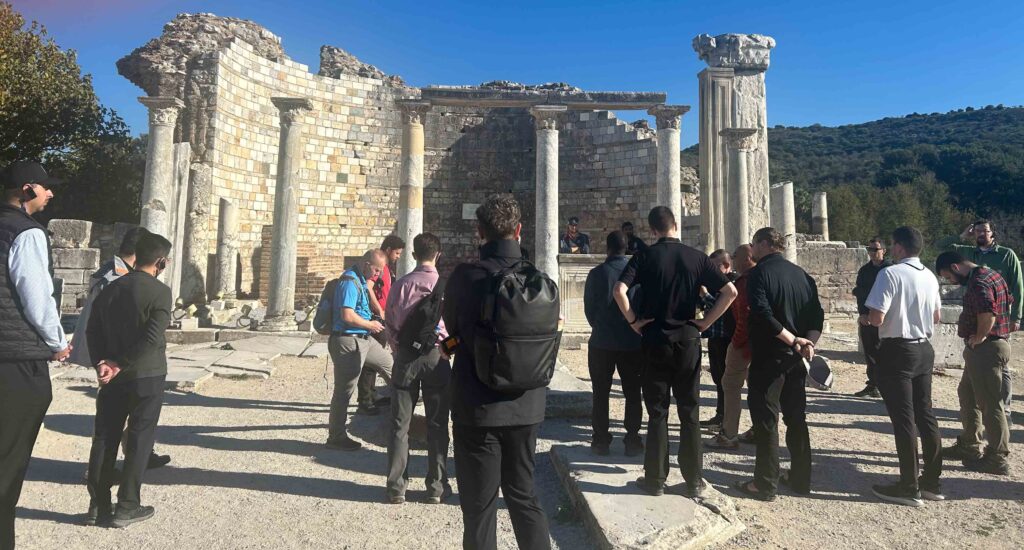
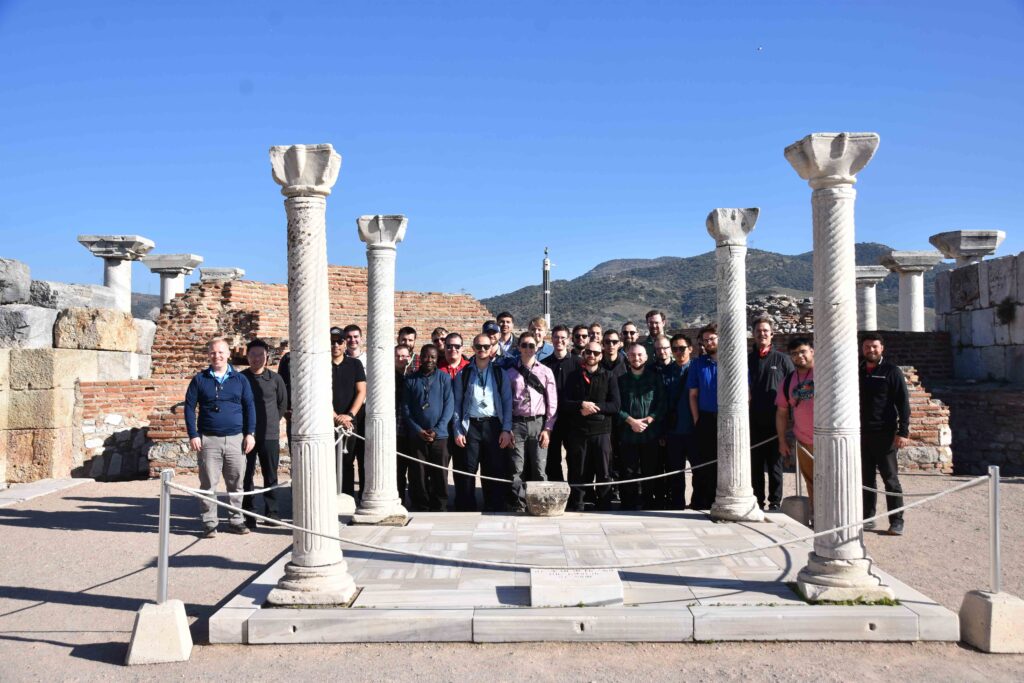
Driving most of the morning and stopping in Miletus—a city St. Paul visited at the end of his third missionary journey—we ate lunch and arrived in Ephesus around 1 pm. Our group saw the ruins of the Basilica of St. John, a 6th-century church built by the Emperor Justinian above the Beloved Disciple’s grave. St. John’s gravemarker is present amidst the ruins, and we stopped for about fifteen or twenty minutes to pray. St. John has long been a friend of mine because of our shared love of God. The youngest of the apostles, John rested on Jesus’ Heart at the Last Supper and was the only one of the Twelve present at the Crucifixion. He wrote five books of the New Testament, and he took the Blessed Virgin Mary into his own home. He wrote about the Love of God, but not without first being called a “son of thunder” for his moody temperament. He outlived all the other apostles as he waited to see Jesus again, a wait that may have seemed like an eternity for someone who was so in love with God. We all prayed in silence around his grave in thanksgiving, and I was moved.
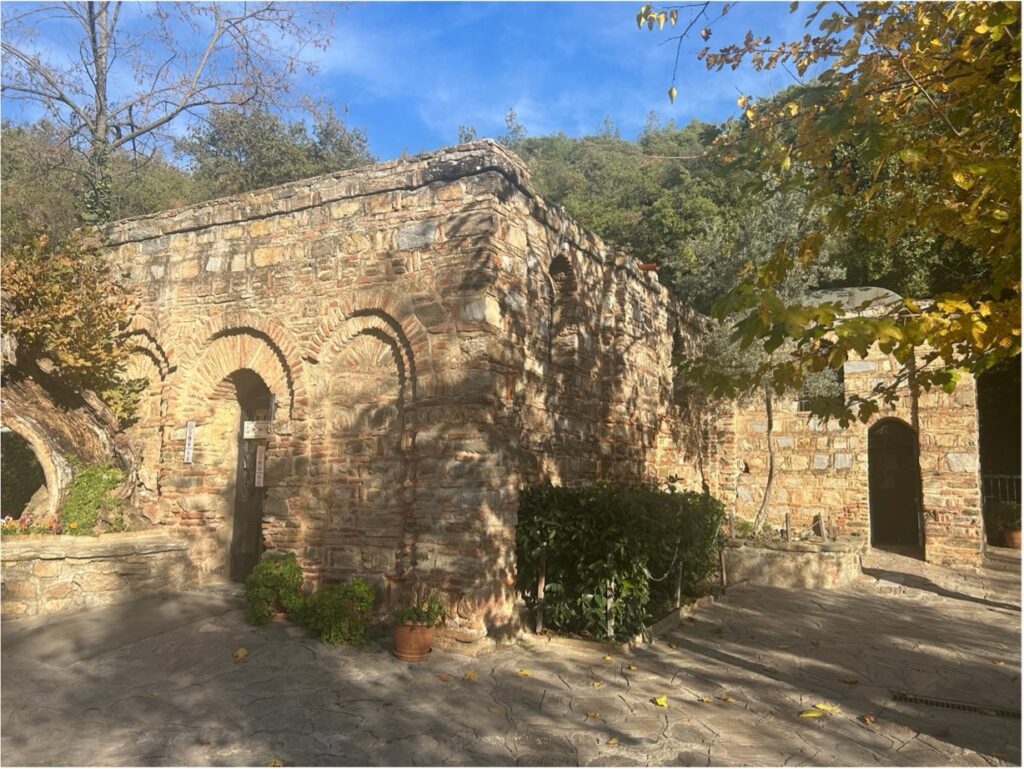
After touring ancient Ephesus, we visited and celebrated Mass at the house where Mary and John lived. It is a simple home, befitting the Woman who is “the lowly servant” of God (Lk. 2:48). Although photographs were not allowed inside her house, I received such a sense of being at home that I did not want to leave when the time came. The ancient city of Ephesus was mistaken in worshiping Artemis as a mother goddess. Mary is no goddess—she is a human being filled with God’s grace, not divine—but she is the perfect mother. The Holy Spirit surely led Mary and John to Ephesus so that the Ephesians could encounter true motherhood from the Mother of God, who is also our Mother (see Jn. 19:26-27). After Mass, we returned to Izmir to get ready for our pilgrimage to continue tomorrow.
Living in Ephesus, Mary and John carried the light of Christ into a world that was dark and had not yet heard the Gospel—but “God is light and in him is no darkness at all” (1 Jn. 1:5). They probably looked like ordinary people to the citizens of Ephesus, though Mary had carried Jesus in her womb and John had laid his head on the Heart of God. As Christians, we are all pilgrims in this world, and hopefully we have also encountered the love of God that transforms us from the inside. This love bursts forth to reveal the light (Jn. 1:8), but God is also intimately present in each one of our hearts and desires a deep interior union with us.
-Jonathan Puckett, Diocese of Peoria