Altar to an Unknown God
Location: Athens, Greece
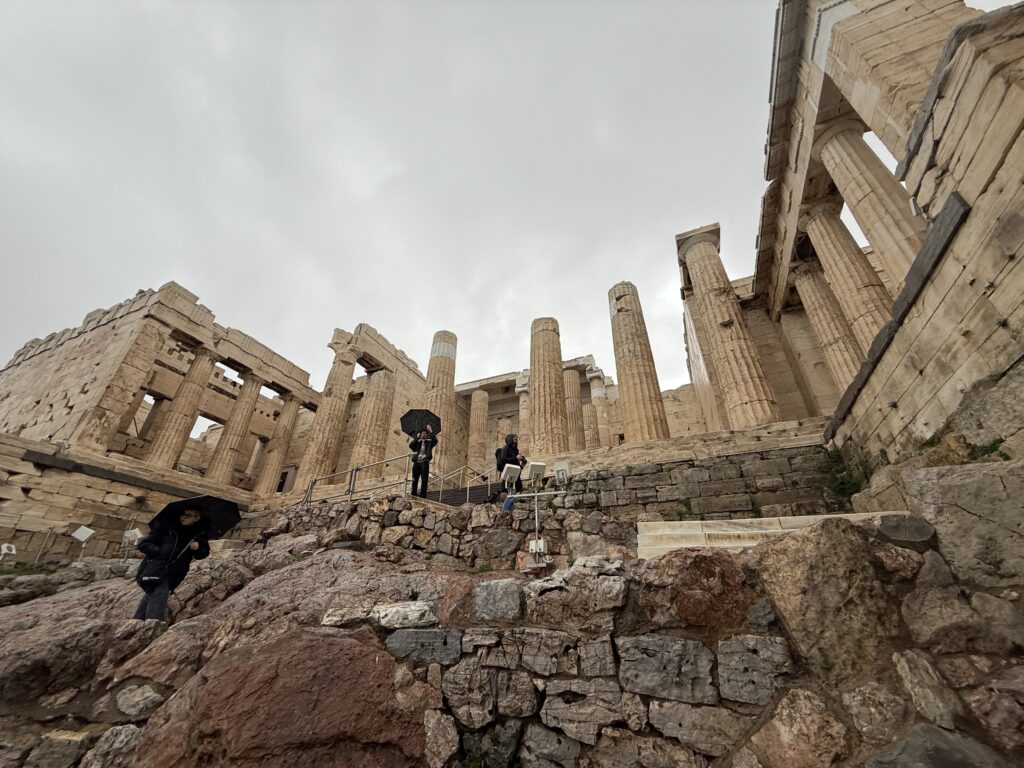
We began our day with a bus tour of Athens, finishing at the Acropolis and the Areopagus. Unfortunately, the tour came with plenty of rain. Raincoats and umbrellas were out in full force, and we pressed on!
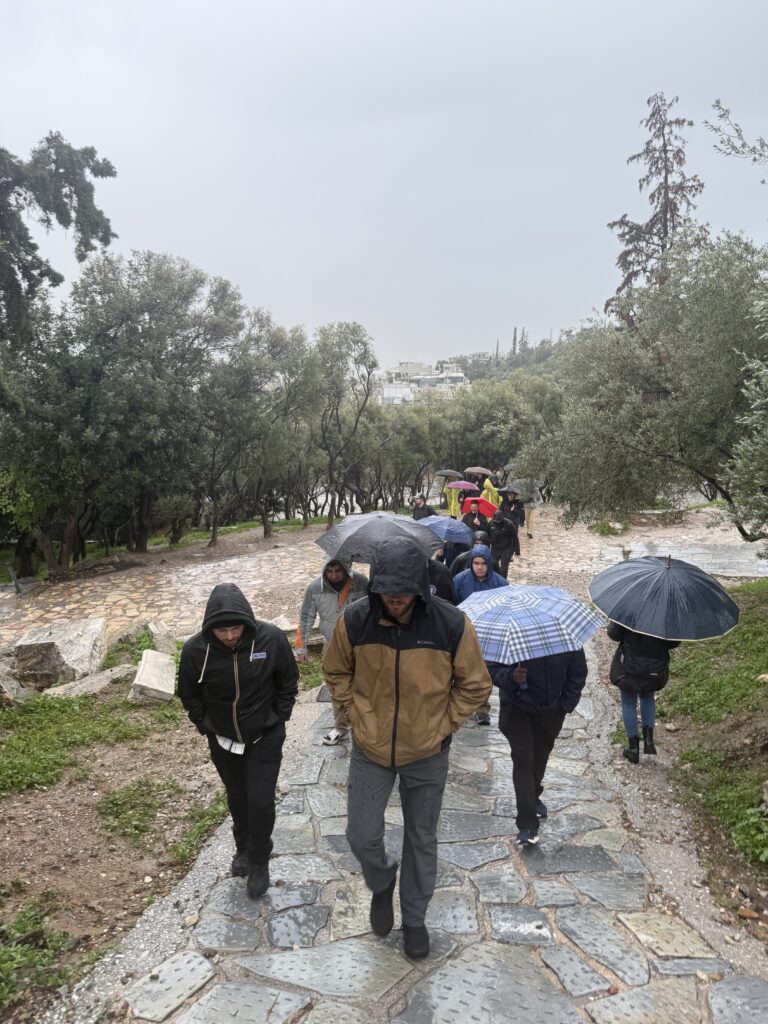

At the Areopagus, we read Acts 17:16–34 (with the help of many umbrellas, as you can see in the photo), where Paul preaches to the Athenians. I was especially struck by the setting in which Paul delivered this sermon. As he spoke, the Temple of Athena and countless statues and altars to various gods and goddesses would have towered above him on the hillside. In the photo, you can see the temple ruins rising over the Areopagus, a dramatic reminder of the spiritual landscape Paul stepped into.
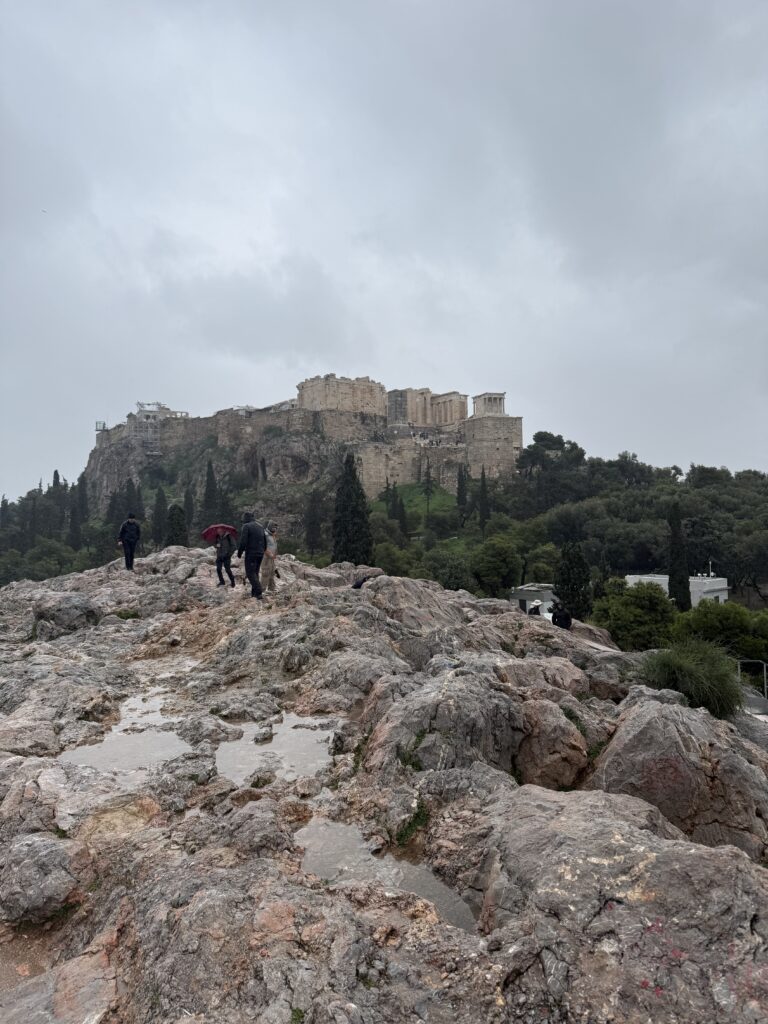
No doubt this place was once filled with many misguided philosophies, false notions, idolatry, and paganism. And yet, Paul does not arrive and shout, “You sinners! You’re all doomed!” Instead, he says something quite astonishing: “I see that you Athenians are a very religious people.” What in the world was Paul seeing in the midst of so much sin?
I imagine Paul looking at their many statues and altars and perceiving, beneath it all, a genuine hunger; a search for truth, for meaning, for fullness of life. Their desires were twisted and misdirected but still rooted in a longing for something real.
And so, when he sees the altar dedicated “to an unknown God,” (Acts 17:23) Paul essentially says, let me reveal to you this [unknown] One you are truly seeking. He does not reject their search outright; he steps into it, gently and lovingly pointing them toward the God they longed for without knowing it.
This led me to consider that this is the same posture we must adopt if we hope to bring today’s “prodigal sons” home to the Catholic Church, as future priests AND as present disciples. The places where we are tempted to write people off are often the very places we should look for their “altar to an unknown God.” Beneath the rubble of harmful philosophies, misguided ideas, and poor decisions, where is Jesus hidden? What good desire lies buried there that we can affirm? What longing can we name and redirect toward Christ?
We cannot begin by condemning people’s life choices, worldviews, or ideologies. That is not what St. Paul did. St. Paul sought out the “altar to an unknown God” in the hearts of those he encountered, and from that starting point he led them toward Jesus. May we learn to do the same.
-Matt Smith, Archdiocese of Dubuque, IA